
Terms Keep Emerging (Feat. MAGA, FANNG, M7, E8)
Nifty Fifty is a term that exists. Translated into Korean, it would be something like "50 wonderful stocks." From the late 1960s to the early 1970s, before the Oil Shock, these were the top 50 U.S. stocks that boasted high returns and dividends, but after the oil shock they crashed and were renamed the Nasty Fifty — a terrible 50. At the end of 1972, the average P/E of these stocks exceeded 40x, but after the first oil shock they crashed in 1973 and 1974, and the S&P 500 also fell more than 40%. Although half a century has already passed, whenever the market rises led by a few large-cap stocks, the collapse of the Nifty Fifty is always mentioned.
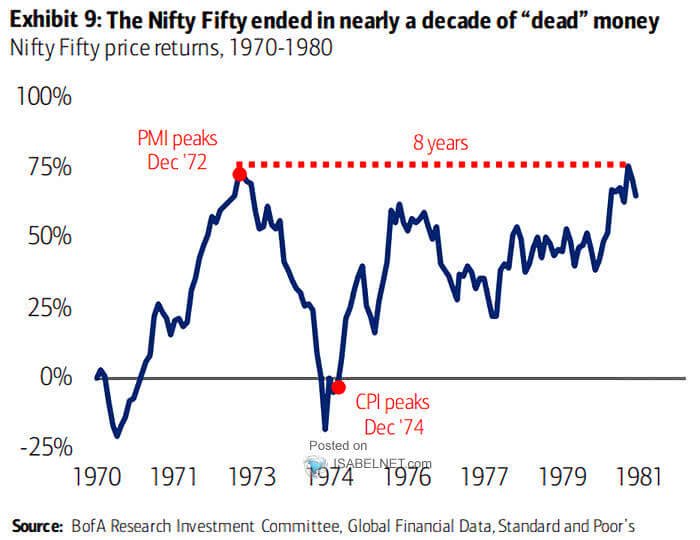 It took 8 years to recover the peak.
The Emergence of TGIF / MAGA in the 2010s
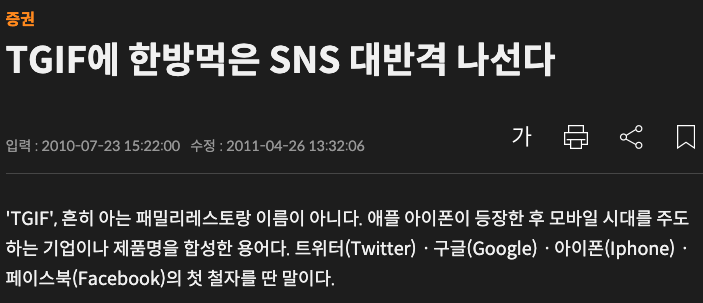
At first, the name TGiF appeared, named after Apple's iPhone, Twitter, Google, and Facebook, but
as Twitter stumbled and from the mid-2010s, along with the smartphone and Cloud boom, the market caps of Apple, Google, Amazon, and Microsoft began to surge.
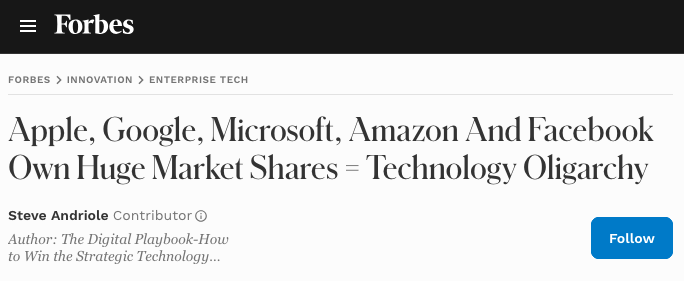
People would note that the four companies' market caps were extremely high relative to the entire stock market, and while giving them the nickname 'MAGA,' they began to bring up the Nifty Fifty episode. This kind of focus on a few large caps was seen as a sign of collapse.
FANNG
Meanwhile, Netflix began to rise from the late 2010s. And then the term changed. It was 'FANNG' – coined by Jim Cramer – with Microsoft removed and Facebook and Netflix added.
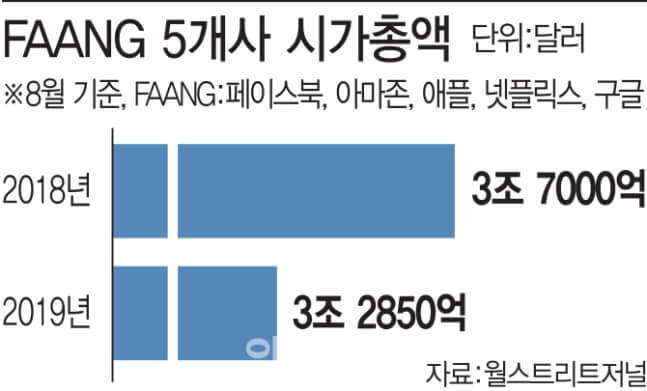
When stocks crashed in 2018 due to the trade war with China, the Nifty Fifty came back to life along with 'FANNG.' In August 2019, the Wall Street Journal diagnosed that these companies were no longer startup-like businesses with seemingly unlimited growth potential, so the existing perception of them as 'stable investment targets' was also changing. The media began to pile on criticism again.
- Bigger and slower FAANG... 'losing its luster' - cited from WSJ, August 28, 2019
- Growth 50 years ago and now: FANNG and Niffy Fitty - Yonhap News, October 31, 2020
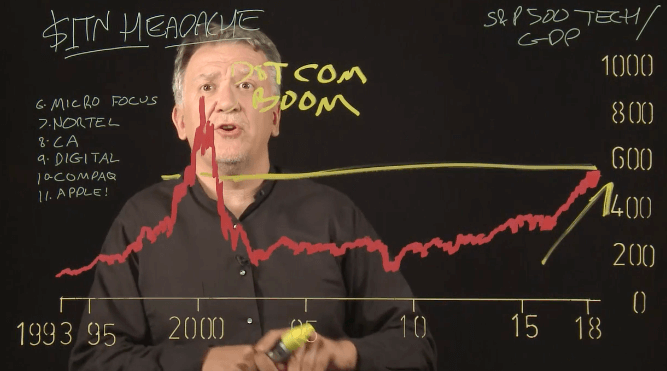
The Financial Times even ran a special feature saying that the weight of tech companies was at dot-com bubble levels.
Magnificent 7
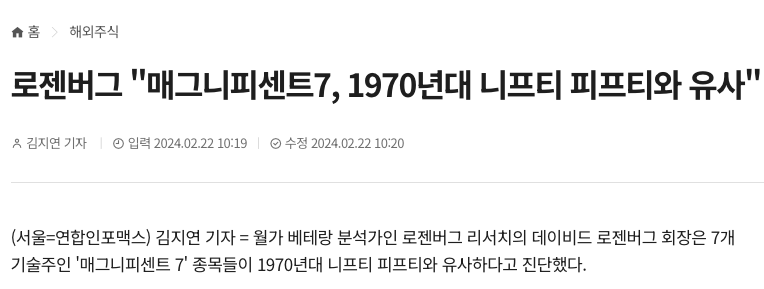
In the 2022 bear market, Meta and Netflix stocks crashed, and as Nvidia and Tesla stocks rose from the early 2020s, the new term M7 was born from 2023.
Torsten Slok, chief economist at Apollo Global Management, pointed out that the M7's valuation is similar to the 'Nifty Fifty' of the early 1970s and the information technology (IT) sector of the S&P 500 during the 2000 dot-com bubble. The Nifty Fifty refers to the 50 large-cap stocks in the S&P 500 that showed high returns from 1969 to the early 1970s.
Jeremy Siegel, a world-renowned investment strategist and professor at the Wharton School, described the Nifty Fifty as "a group of growth stocks that soared in the early 1970s and crashed to the ground in the brutal bear market of 1973–1974," adding that "after most of the Nifty 50's value had fallen, many investors swore they would never again pay more than 30 times earnings for stocks."
Enormous Eight
Enormous 8
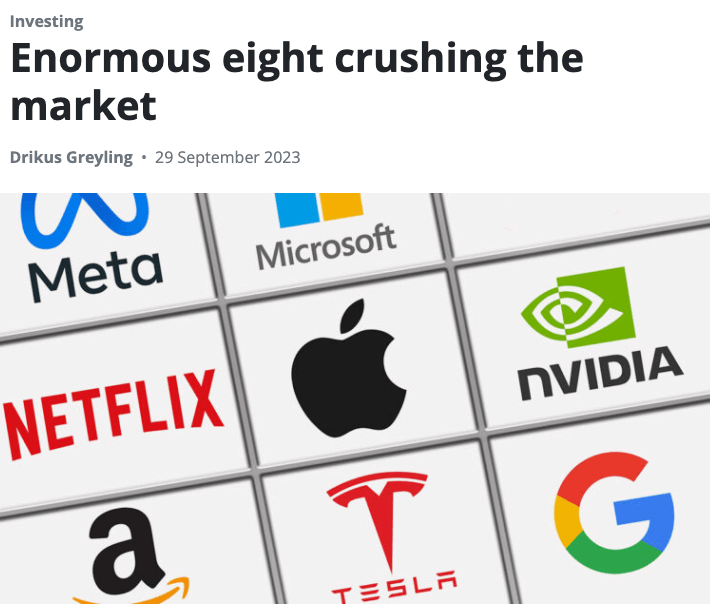
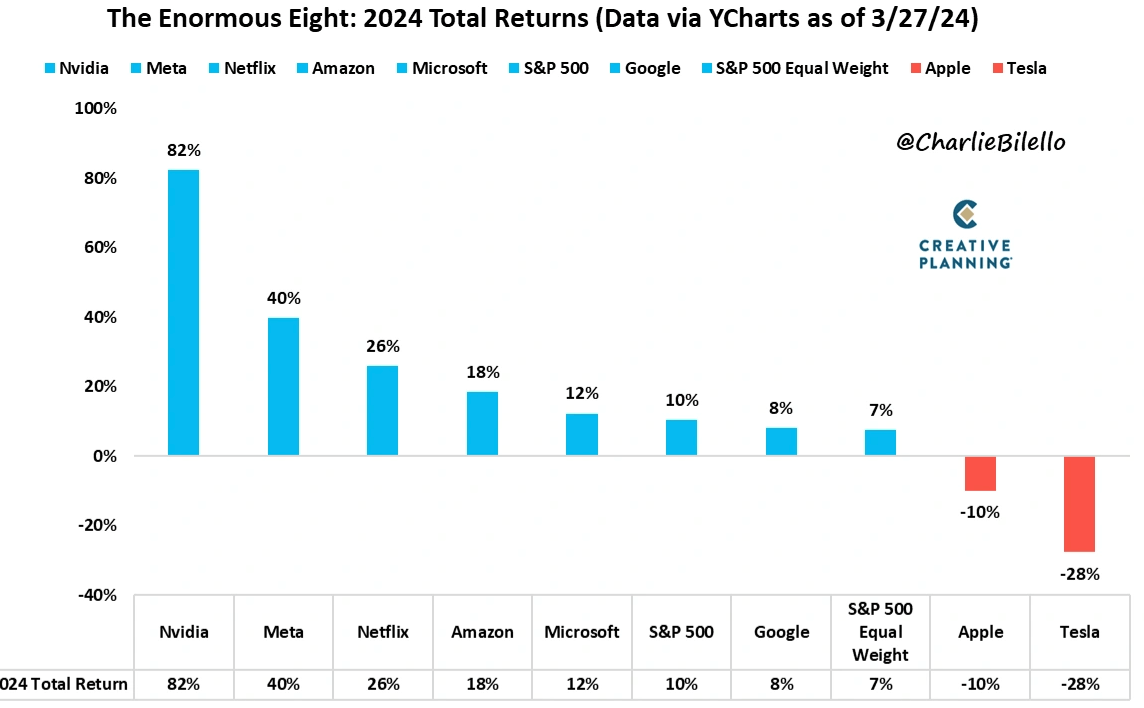
As Meta's stock price rose more than 5x from its low, the name has now changed from M7 to E8.
Related posts
RSUPPORT's Financial Story
RSUPPORT, despite being a software company, held a stake in an asset management company and suffered losses from derivative investments. Performance was decent, but cash flowed out into real estate and investments, destabilizing its financial structure.
I'll Tell You How to Make Money
There are many scammers in the world. They package and sell poor results over and over again. Don't be swayed by promises of making money—you must be on your guard yourself.
Ford, the Greatest Businessman of the Modern World
Henry Ford drove innovation in industry and logistics by introducing mass production of automobiles and the assembly line. His inventions became the foundation of modern capitalism and production, yet political and social controversy has often left him underrated.