
KDI Exchange Rate Problem: Killer Question Explanation
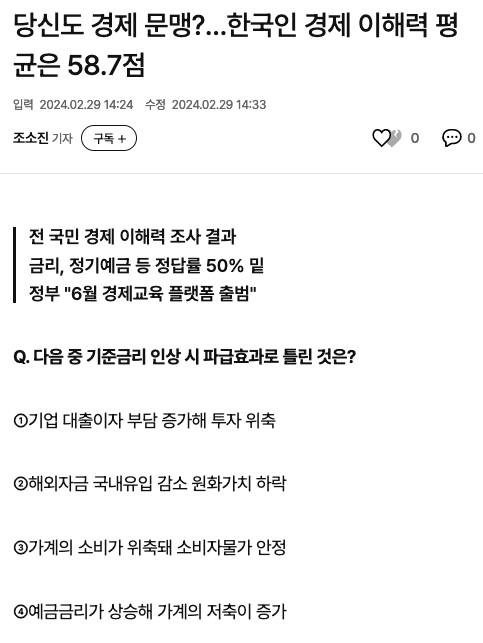
What is the answer? The answer is 2. Even though it was a four-choice multiple choice question, the correct answer rate was very low. It's easy if you think from the company's perspective. If I were an exporter and received $10 million in advance, but had no immediate use for this money for a year, a dilemma arises.
- Is it better to exchange right away?
- Is it better to exchange later?
If you're thinking of exchanging right away, buying a 2-year bond in Korea gives 3% interest, while leaving the money in the U.S. earns 5% interest. Then naturally, it's better to leave it in the U.S., right? But if the Bank of Korea raises the base rate and the interest rate becomes 6%, it's obviously better to keep it in Korea, so the answer is 2.
But what if an exchange loss occurs?
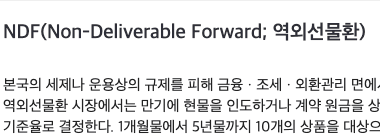
Let's go a little deeper. Then a problem arises: what if an exchange loss occurs at the 2-year maturity point?
That's why there is the offshore NDF (non-deliverable forward) market in New York, and among non-reserve currencies, the Korean won and the baht are the most traded currencies. There, you first buy a forward contract that lets you buy won two years later at a rate 1% higher than the current exchange rate. Then you receive 5% interest, subtract the 1% exchange-rate hedge premium, and get 4%, so it is naturally better to leave the money in the U.S. by even 1% than to leave it in Korea at the pre-rate-hike interest rate (3%).
Then why did the exchange rate rise even though rates were raised now?
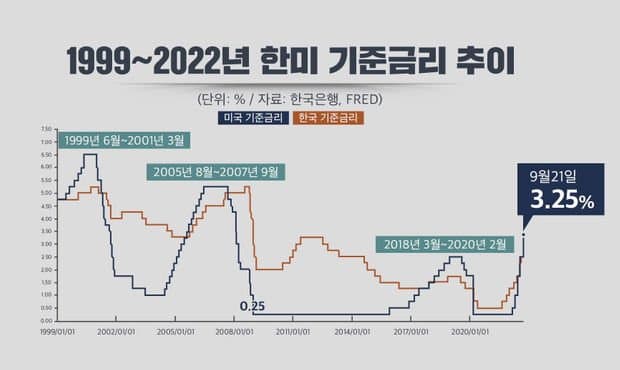
That's because even if Korea raises its base rate, the U.S. raises rates faster, so the value of the won falls; and as more companies delay currency exchange as above, the decline in the won's value accelerates.
Related posts
Ace Bed Company Analysis
Ace Bed is a premium bed brand focused on the domestic market, with a very stable financial structure and debt-free management, maintaining a high dividend yield (5.71%). ROE is decent, but capital efficiency is low due to excessive cash holdings. The owner family's stake exceeds 80%, and maintaining the listing appears to be largely for management succession. Short-term surges are difficult, but long-term investment appeal still exists.
The High-Dividend Trap
'High-dividend' stocks are not always a good choice. A high dividend payout ratio means lower long-term growth, and receiving dividends every year eliminates the tax deferral effect. Caution is needed because the dividend may not be sustainable or the company may have low growth potential.
Is Trump Really a Successful Businessman President? (Feat. 6 Bankruptcies)
Trump has packaged himself as a successful businessman, but in reality he has experienced six bankruptcies, and most of his assets were inherited from his father. He repeatedly faced crises through excessive leverage and reckless investments, and in 2024 faced yet another crisis due to inflating his assets.