
The High-Dividend Trap
Investors naturally prefer a stock with cash flow over one without cash flow. However, if you are holding a stock only because it is a "high-dividend" stock, there are a few things you need to examine.
Dividend Payout Ratio and Long-Term Growth Rate
Companies with a high dividend payout ratio have lower long-term growth estimates. A company's long-term Earnings Per Share growth estimate can be expected to be as high as its ROE, but if it loses that much cash to dividends, the long-term EPS growth estimate can be expressed as (1-배당성향) * ROE. In other words, the more dividends there are, the more growth is inevitably delayed.
Is the Dividend Sustainable?
In general, a stock's dividend yield is calculated based on the previous four quarters. What matters, however, is to check whether the dividend yield is high because EPS has recently declined due to lawsuits or a sluggish industry, so the dividend is expected to decline accordingly and has already been priced into the stock but has not yet affected the dividend yield. Free Cash Flow to Equity is a metric that can be used here. If a company cuts its dividend, the stock price will crash once more.
Why Do Companies Pay High Dividends?
A stock paying high dividends means that its appeal other than dividends is that much lower. This is especially true of U.S. oil refiners and banks. With growth momentum weakened, expectations for the stock price are low, and in many cases the stock price is propped up as a way to drive it upward.
Losing the Tax Deferral Effect
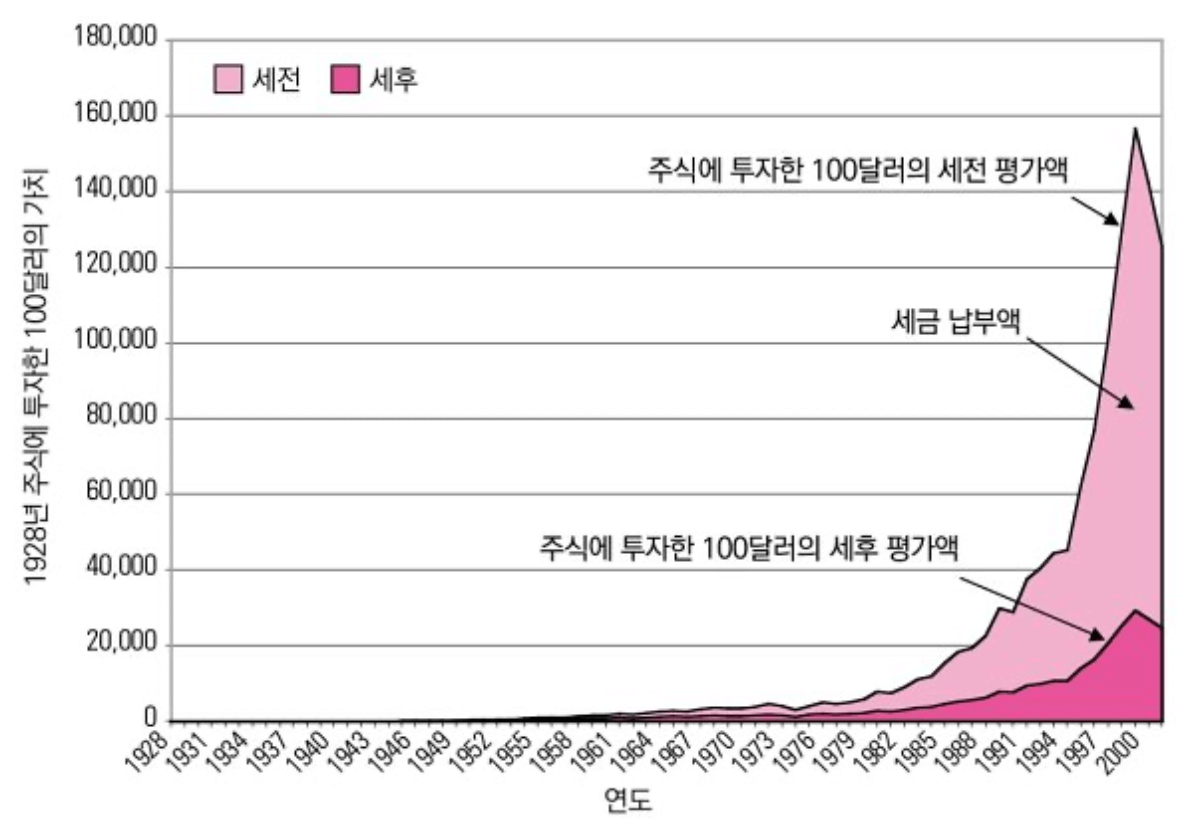
If a company uses all of its profits to buy back and cancel its own shares, shareholders' valuation rises, but because they have not sold, taxes do not increase. However, if they receive dividends every year, they lose the tax deferral effect by that amount. If taxes were also paid each year on the appreciated value of the stock, returns would drop dramatically, as shown in the table below.
Conclusion
From an investor's perspective, rather than a company that pays excessively high dividends, wouldn't it be better to find a value stock that pays minimal dividends and buys back its own shares, or a growth stock that can generate greater ROE from the cash it earns?
Related posts
Ace Bed Company Analysis
Ace Bed is a premium bed brand focused on the domestic market, with a very stable financial structure and debt-free management, maintaining a high dividend yield (5.71%). ROE is decent, but capital efficiency is low due to excessive cash holdings. The owner family's stake exceeds 80%, and maintaining the listing appears to be largely for management succession. Short-term surges are difficult, but long-term investment appeal still exists.
Is Trump Really a Successful Businessman President? (Feat. 6 Bankruptcies)
Trump has packaged himself as a successful businessman, but in reality he has experienced six bankruptcies, and most of his assets were inherited from his father. He repeatedly faced crises through excessive leverage and reckless investments, and in 2024 faced yet another crisis due to inflating his assets.
No-Capital Acquisition and the Youngpoong Paper Incident
In 2023, Daeyang Metal acquired Youngpoong Paper with virtually no capital, and afterward Youngpoong Paper announced its entry into secondary batteries, sending its stock price soaring. However, excessive valuation relative to earnings and suspicions of stock manipulation emerged, and after the investigation the stock crashed. The damage was passed on to retail investors and securities firms.