
No-Capital Acquisition and the Youngpoong Paper Incident
Around April 2023, after Youngpoong Paper conducted a free stock issuance, its stock price began to rise steadily. Around that time, the largest shareholder changed from Q Capital to Daeyang Metal, but the problem was that the acquisition was effectively a no-capital M&A.
Daeyang Metal spent 130 billion won to buy a 50% stake in Youngpoong Paper, of which 86.1 billion won was borrowed. Daeyang Metal's own funds were 43.9 billion won, but even the 86.1 billion won in borrowings were secured by Youngpoong Paper shares that it had not yet received, and its 43.9 billion won in equity capital consisted of 15 billion won in convertible bonds and 23 billion won in short-term borrowings nominally for operating funds, so the actual money used for the acquisition was just over 6 billion won. In addition, after acquiring Youngpoong Paper, Daeyang Metal issued 17 billion won in CBs, which Youngpoong Paper then purchased in full.
Before the acquisition, Youngpoong Paper's market capitalization was about 250 billion won, more than twice Daeyang Metal's market cap at the time. Industry insiders voiced concern over the side effects of the reckless acquisition, saying it was "as if Youngpoong Paper was acquired with Youngpoong Paper's money."
Daeyang Metal is a stainless steel manufacturer unrelated to papermaking, and it is not a company with enough capital to expand its business. Since Youngpoong Paper's corrugated cardboard plant was also in poor shape, the prevailing view in the industry was that the acquisition was aimed at acquiring the land of Youngpoong Paper's Pyeongtaek plant.
Youngpoong Paper announced that it would expand its secondary battery business. Youngpoong Paper is a paper company founded in 1970. It mainly produces linerboard used to make paper tubes and corrugated cardboard. Daeyang Metal, a stainless steel manufacturer, acquired it last November under the banner of business diversification. Since then, at its shareholders' meeting in March of this year, Youngpoong Paper added 16 business purposes, including electronic component manufacturing, unmanned aircraft manufacturing, doll and toy manufacturing, and software development.
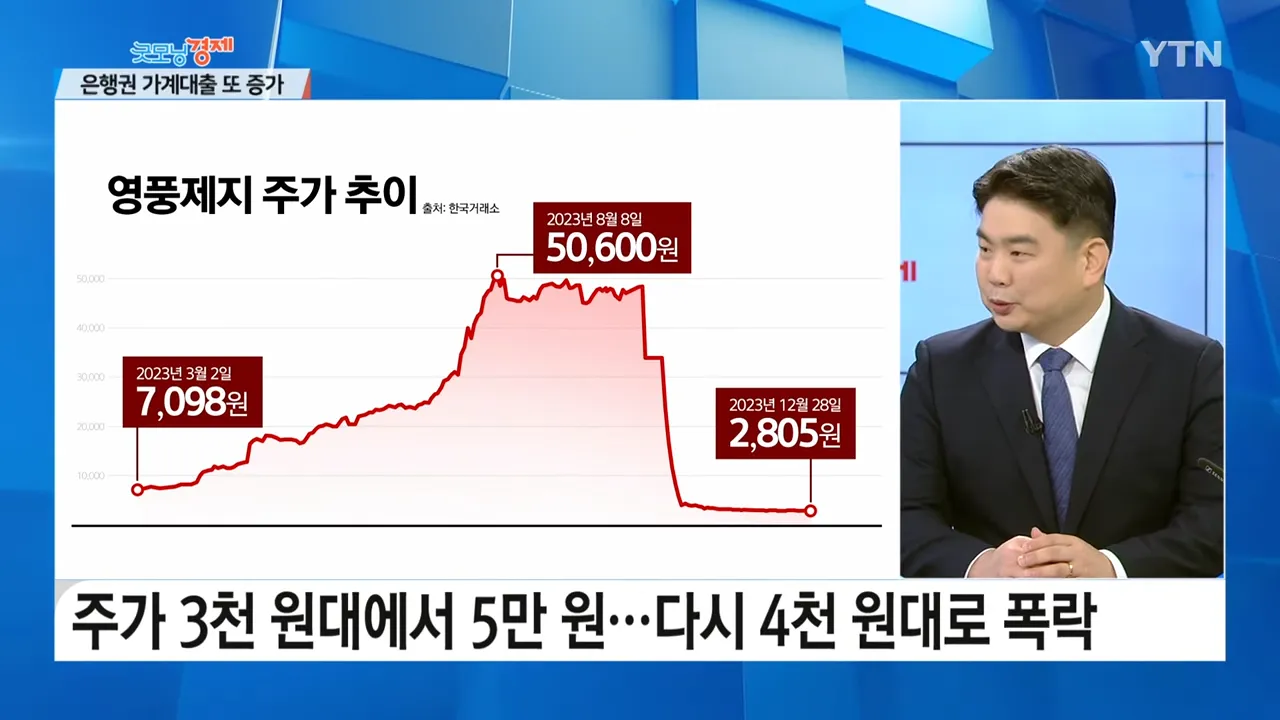
Meanwhile, Youngpoong Paper declared its entry into the secondary battery business and its stock price rose dozens of times. Daeyang Metal also began selling Youngpoong Paper shares to various investment partnerships in block deals immediately after the acquisition. Riding the EcoPro and secondary battery theme boom, the company's market capitalization, which was about 250 billion won before being acquired by Daeyang Metal, later swelled to 2.2 trillion won.
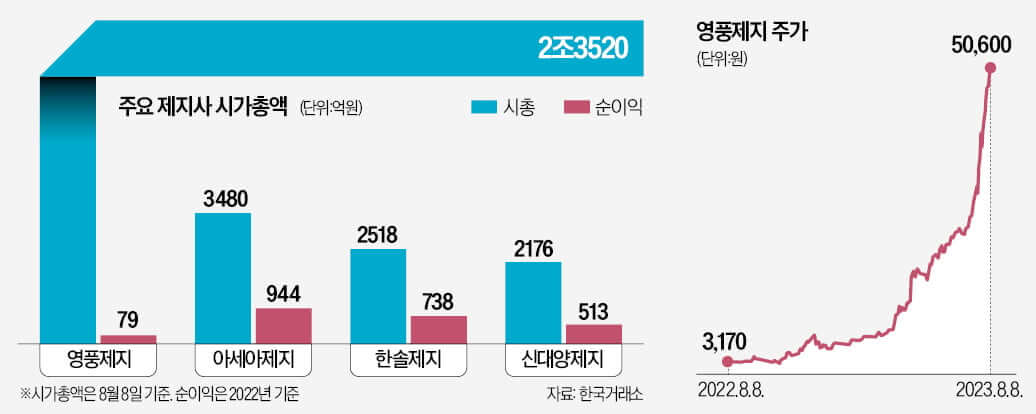
The problem was that it was trading at a valuation far too high compared to other companies in the same industry. While peers such as Hansol Paper, Asia Paper, and Sindaeyang Paper traded at a PER of around 4 and a PBR of 0.3x, Youngpoong Paper was trading at a PER of 322x and a PBR of 17x.
When the SG-originated stock manipulation scandal broke in April 2023, attention also turned to Youngpoong Paper. It was similar in that buy orders steadily flowed in through the desks of foreign brokerages, credit exposure was approaching 16%, and finally, it was a stock that could not be short-sold.
The financial authorities' and police's investigation showed that Youngpoong Paper had already been under steady investigation since the SG-originated stock manipulation scandal. As soon as arrest warrants were issued for four suspects, they sold all their Youngpoong Paper shares the next day. The stock then hit the lower price limit for seven consecutive trading days, setting the longest streak of daily limit-downs on record.
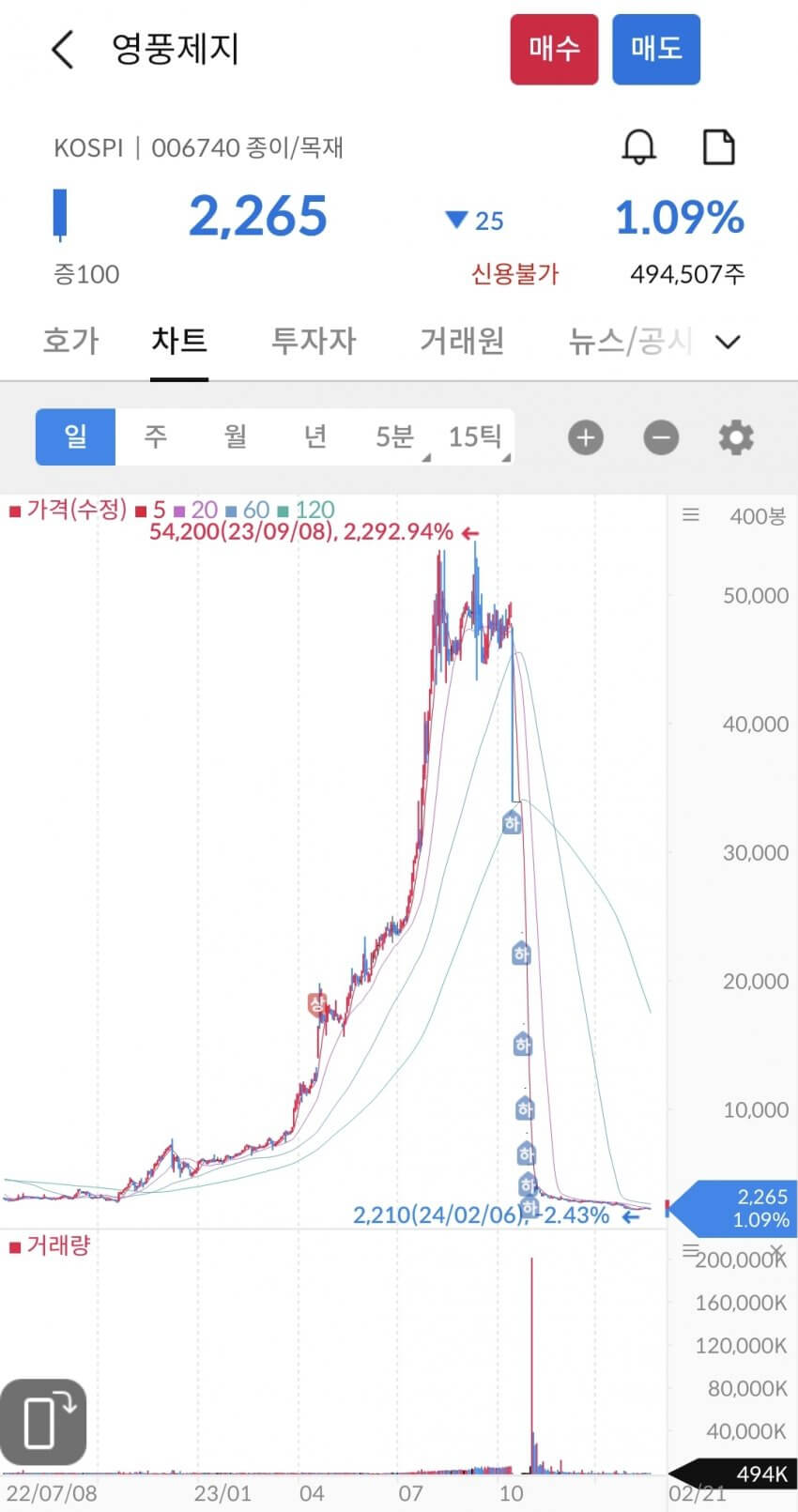
According to prosecutors, Mr. Lee and his associates are accused of using more than 330 securities accounts from October 2022 to October of last year to place market-manipulation orders, such as fictitious and matched trading and high-priced buy orders, driving up Youngpoong Paper's stock price and reaping illegal gains totaling approximately 661.6 billion won (in violation of the Capital Markets Act).
Even the existing paper business deteriorated in profitability, and with increased financial costs, operating profit eventually turned to a deficit starting in 2023. In the end, even the company itself was wrecked, and the damage fell entirely on retail investors.
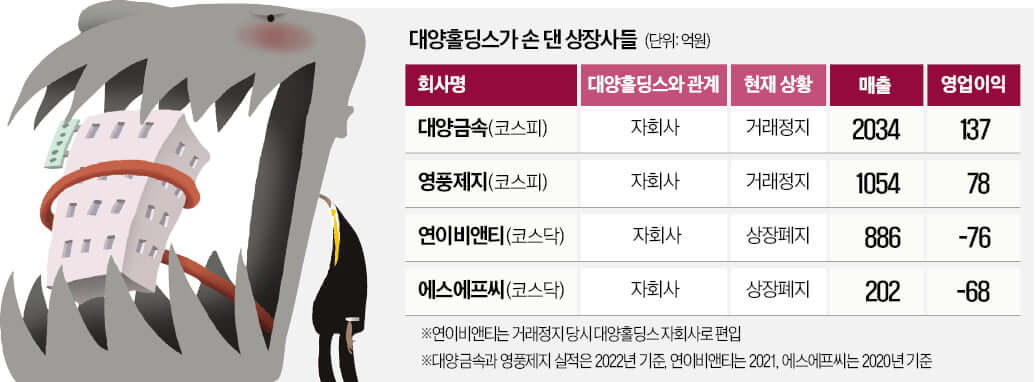
Daeyang Holdings had wrecked more than one or two companies in this way, but no direct connection to the stock manipulation was found. In this case, Kiwoom Securities, which failed to block credit trading in Youngpoong Paper, suffered losses of around 500 billion won.
Related posts
Ace Bed Company Analysis
Ace Bed is a premium bed brand focused on the domestic market, with a very stable financial structure and debt-free management, maintaining a high dividend yield (5.71%). ROE is decent, but capital efficiency is low due to excessive cash holdings. The owner family's stake exceeds 80%, and maintaining the listing appears to be largely for management succession. Short-term surges are difficult, but long-term investment appeal still exists.
The High-Dividend Trap
'High-dividend' stocks are not always a good choice. A high dividend payout ratio means lower long-term growth, and receiving dividends every year eliminates the tax deferral effect. Caution is needed because the dividend may not be sustainable or the company may have low growth potential.
Is Trump Really a Successful Businessman President? (Feat. 6 Bankruptcies)
Trump has packaged himself as a successful businessman, but in reality he has experienced six bankruptcies, and most of his assets were inherited from his father. He repeatedly faced crises through excessive leverage and reckless investments, and in 2024 faced yet another crisis due to inflating his assets.