
Kumyang's Trading Halt and How It Got There
A story about Kumyang, connected to the earlier notes A Look at the Kymyang Incident and Glowicks Story
Part One - A Foaming Agent Maker Close to a Zombie Company
To begin with, Kumyang was a company that made foaming agents.
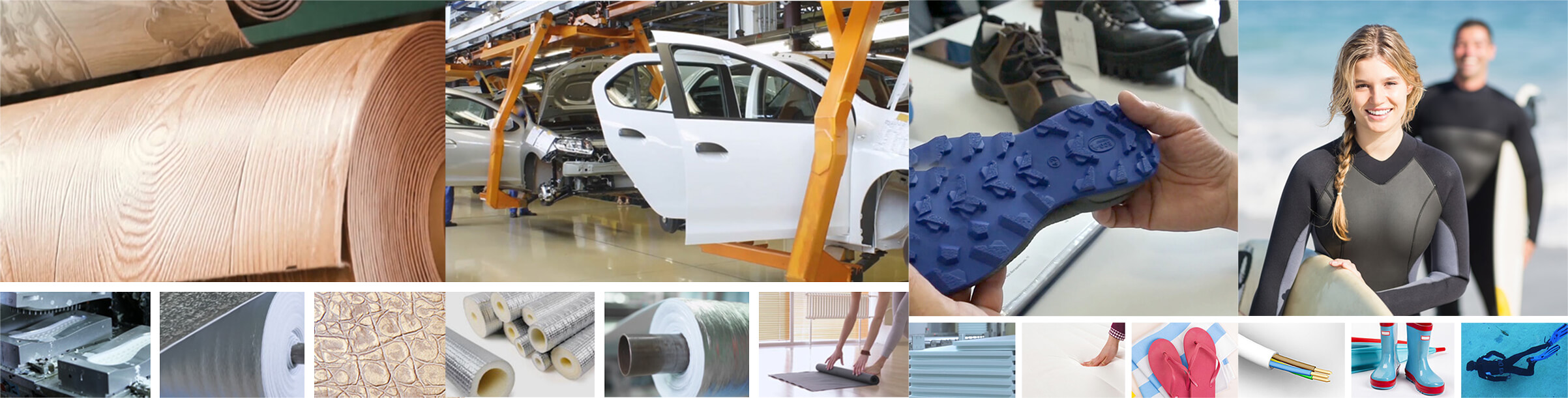 Fields where foaming agents are used
A foaming agent is a material mixed into or melted with plastic to make the material foam. In chemical processes, foaming agents are added to plastics and rubber to create a cell structure, which increases volume or reduces weight.
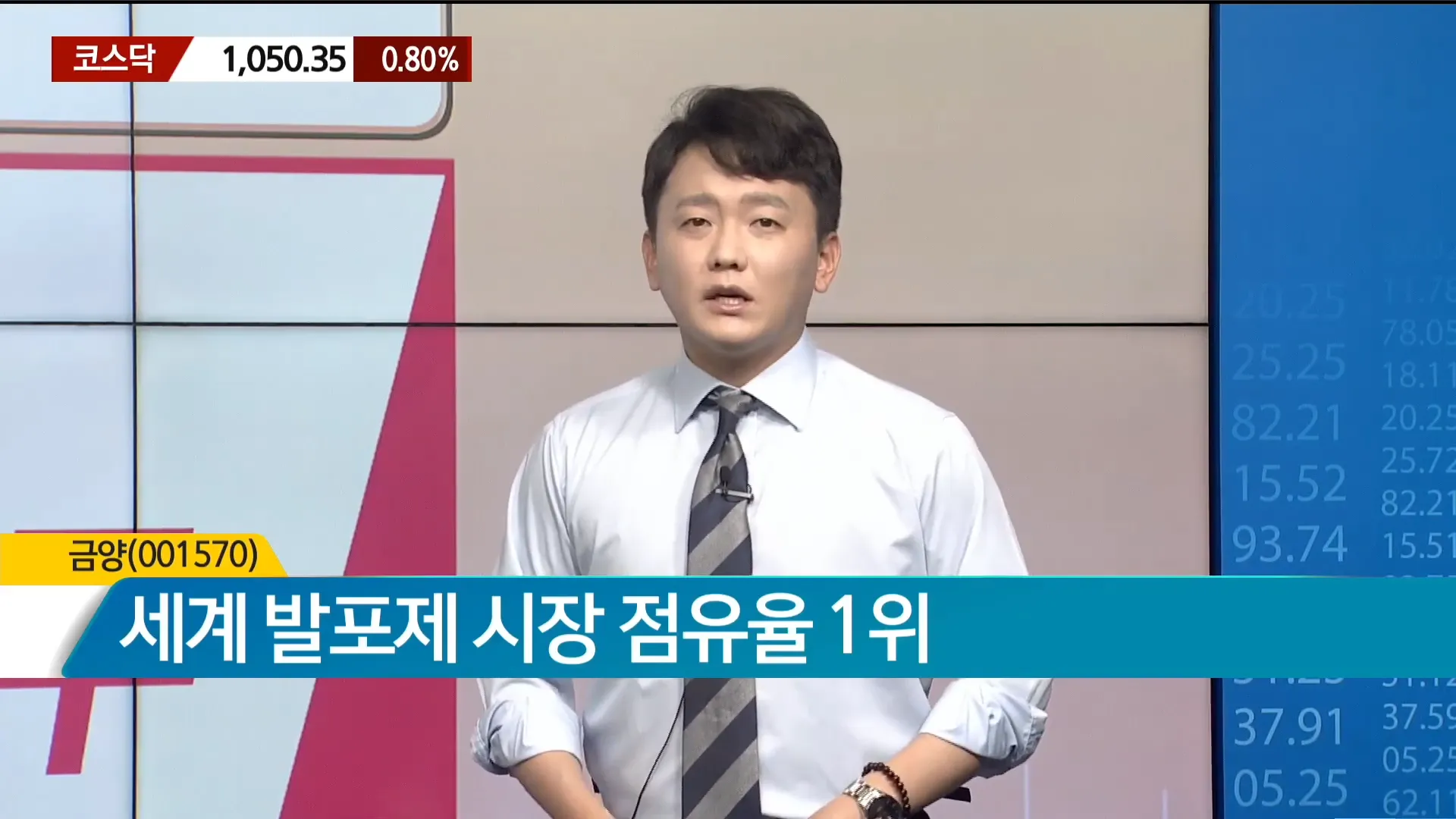
The company claims to be the world's number one in foaming agents, but I could not find the basis for it. The entire foaming agent market is about 4.4 billion dollars, while Kumyang's revenue is around 100 billion won. If anything, it was hard to see it as a company with a world-leading moat.
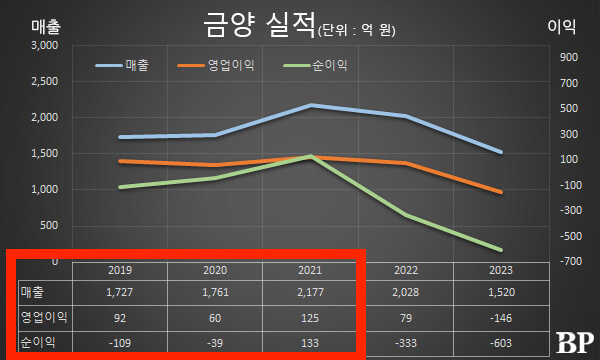
From 2019 to 2021, Kumyang was effectively a company whose net income summed to roughly zero. Then it said it was moving into batteries, and next it claimed to have struck gold with a lithium mine.
Part Two - The Makeover into Secondary Batteries
Park Soon-hyuk, Kumyang's public relations director, said that within one to two months of signing this MOU the company plans to sign the main contract and spend 35 to 40 billion won in initial development investment to secure more than 60% of the mine, and that it expects to be able to actually supply tin and coltan to the market within one to two years and lithium in about four years
According to the company, this mine holds a total of 118 trillion won worth of minerals, including 360,000 tons of lithium on a metal basis, 650,000 tons of tungsten, and 200,000 tons of molybdenum.
Investors reacted immediately the moment the disclosure came out. Kumyang hit the after-hours limit up (9.93%), and the next day (the 11th) opened more than 20% above the previous session's close and finished the day up more than 18%.
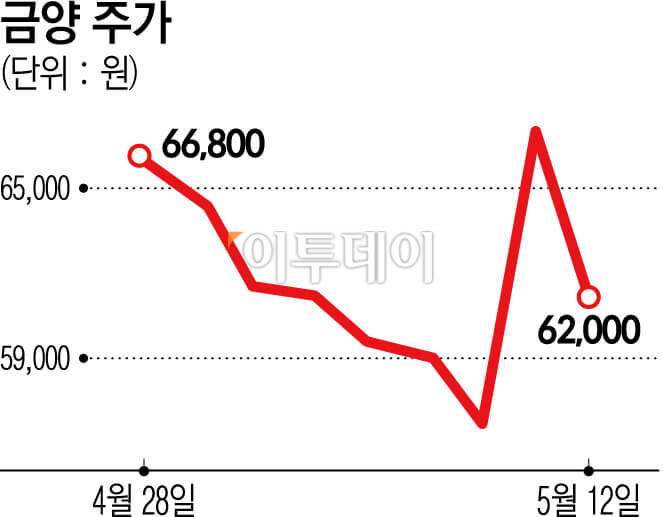
It was a deeply odd disclosure. Buying a mine worth 118 trillion won for a mere few hundred billion made no sense. But the market started going up. It looked to stall for a moment, but by July 2023 it hit an all-time high of 108,800 won.
Part Three - Truths Surfacing
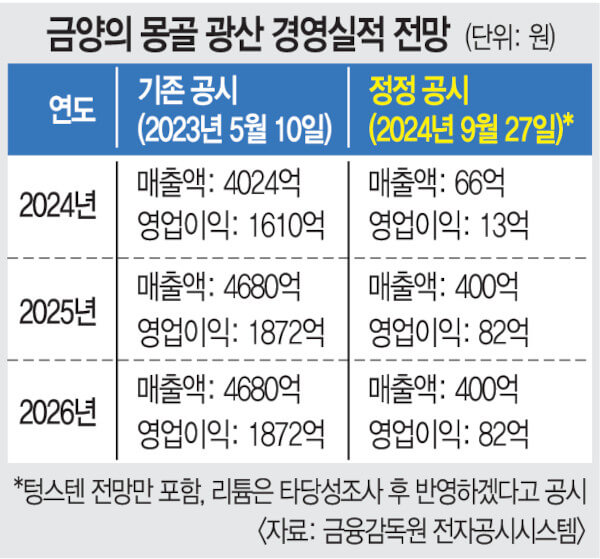
As the moment of truth approached, the earlier disclosures began to change. First the results of the Mongolian mine shrank by 97%: the company announced that the mine it had bought for 100 billion won was expected to bring in about 1.3 billion won in operating profit a year
Kumyang, listed on the KOSPI, acquired the Mongolian mining company MONLAA LLC last year. It spent more than 100 billion won to acquire a 60% stake. The purpose was 'a stable supply of lithium, a raw material for secondary batteries'. At the time Kumyang said, "it is a company with local mining rights, and we judged this a good opportunity and decided to acquire it." Yet it has been confirmed that MONLAA does not hold mining rights.
The Congo mine, meanwhile, had found nothing at all, let alone lithium, and was just digging into the ground. All the while, Kumyang's financial condition was deteriorating fast.
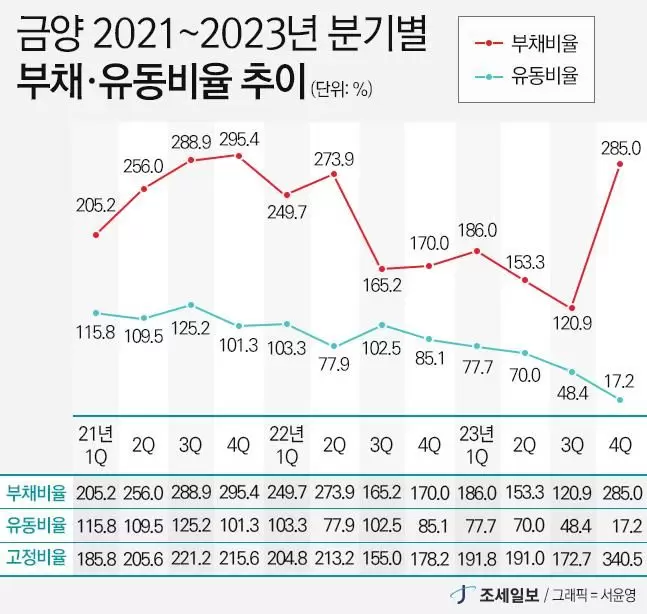
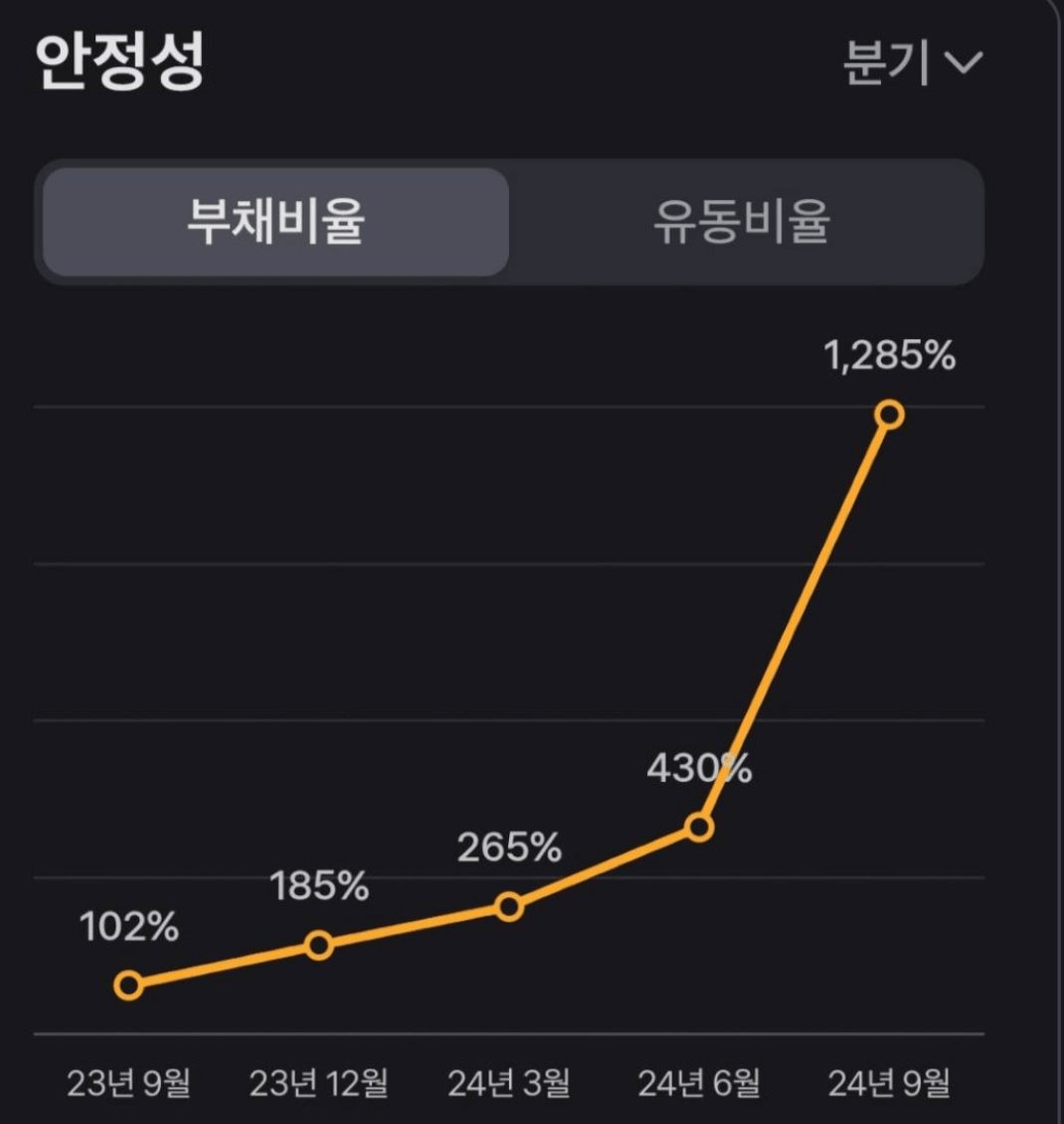
Samil PwC, Kumyang's auditor, made a truly unusual remark: 'there is uncertainty about the company's ability to continue as a going concern.' In other words, it had started talking about the possibility of bankruptcy. Coming not from a third party but from the audit report of the external auditor, it was a remark of a kind you rarely see. Beyond that, the company's strange behavior continued.
- Kumyang flags the risk in its securities registration statement: "we may face measures such as a criminal referral..."
- Kumyang audit: "an additional 10.4 billion won in revenue and 5.173 billion won in operating profit recognized"
- The counterparty in the 10.4 billion won revenue overstatement is a private company owned by the owner's younger brother
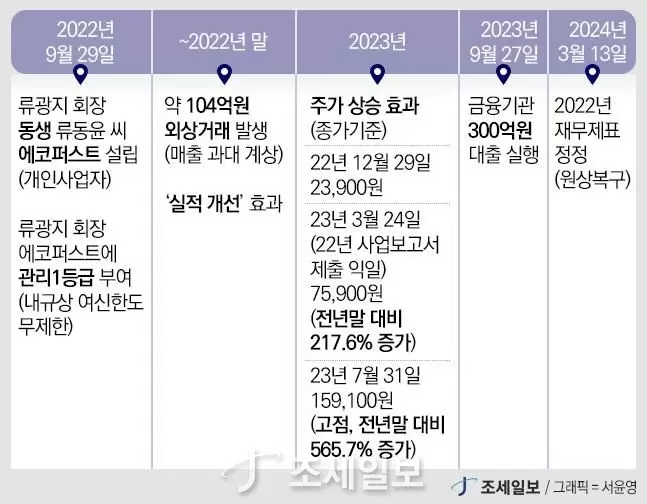
In the middle of all this, a sole proprietorship was set up in the younger brother's name to inflate revenue, and Kumyang lent money to what was effectively the chairman's personal company, which then bought Kumyang shares and sold them at the top. And then it lent money to the company.
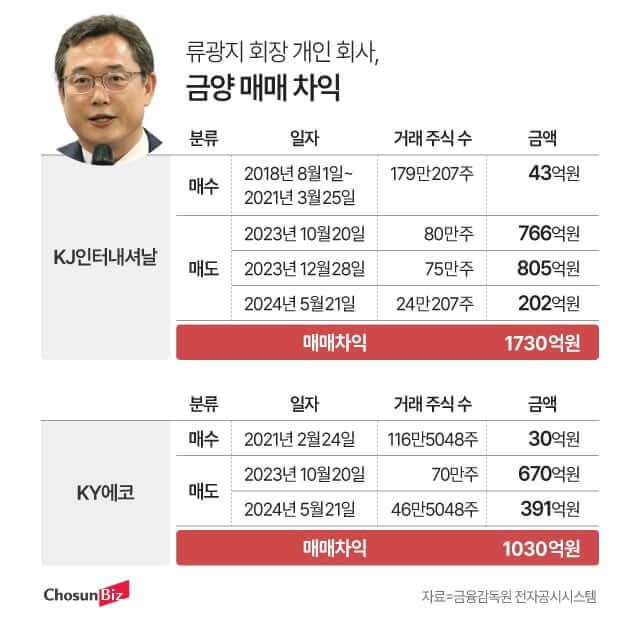
Chairman Ryu was able to lend Kumyang tens of billions of won because KJ International and KY Eco had been buying and selling Kumyang shares early on, booking capital gains of 173 billion won and 103 billion won respectively.
The two companies gradually began selling shares as Kumyang's price rose. Kumyang's share price touched 194,000 won intraday in July of that year and then slid little by little. In October last year KJ International sold 800,000 Kumyang shares and KY Eco 700,000 shares in after-hours block trades.
KJ International then sold another 750,000 shares at the end of last year. Five months later, KJ International and KY Eco cleared out all of their remaining Kumyang stakes. KJ International sold 240,207 shares and KY Eco 465,048 shares at 84,264 won each. The money piled up this way then flowed back to Kumyang in the form of short-term borrowings.
Part Four - A Market That Does Not React, and the Trading Halt
As the share price collapsed, articles about all sorts of MOUs suddenly poured out.
Kumyang, a secondary battery company, signed a contract on the 11th with Saudi Arabia's GCC Lab Technical Services to supply and maintain 4695 battery modules for six years from 2025, with a guaranteed amount of about 137.6 billion won
Kumyang announced on the 19th that it had signed a contract to supply 1.72 billion dollars (about 2.3 trillion won) worth of '2170' secondary battery cells to Nanotech Energy of the United States over six years starting next year. The contract is the first order won by Kumyang since it moved in earnest into the secondary battery business
It agreed to deliver a total of 750 units of battery systems (battery pack, BMS, high-voltage control box, harness) in pack form, using 21700-50E cylindrical batteries for electric buses, from 2026 through 2030. The deal is worth about 78.8 billion won.
MOUs worth hundreds of billions, thousands of billions, even trillions of won poured out, but the striking thing is that Kumyang had not even properly built its battery plant in Busan yet.
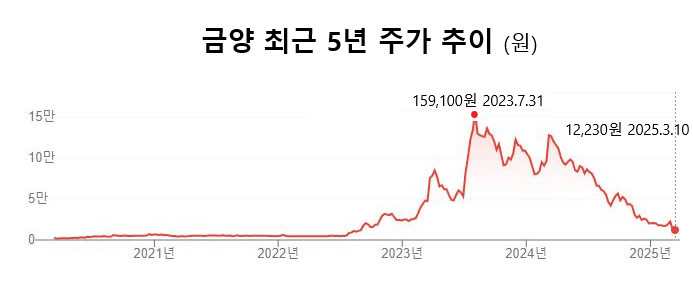
In the end it was not enough to stop the share price from falling. When the price fell so far that a rights offering became impossible, the company withdrew the offering, and with the 10 penalty points from the earlier Mongolian mine case plus 7 penalty points for this disclosure violation, it reached 17 points and delisting was decided.
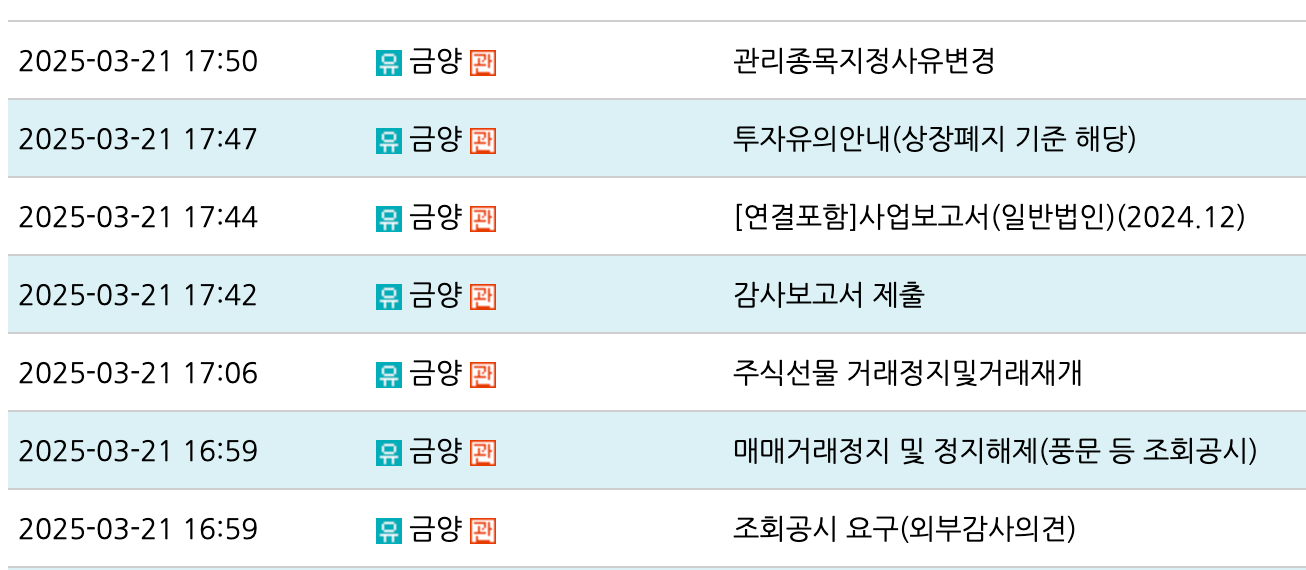
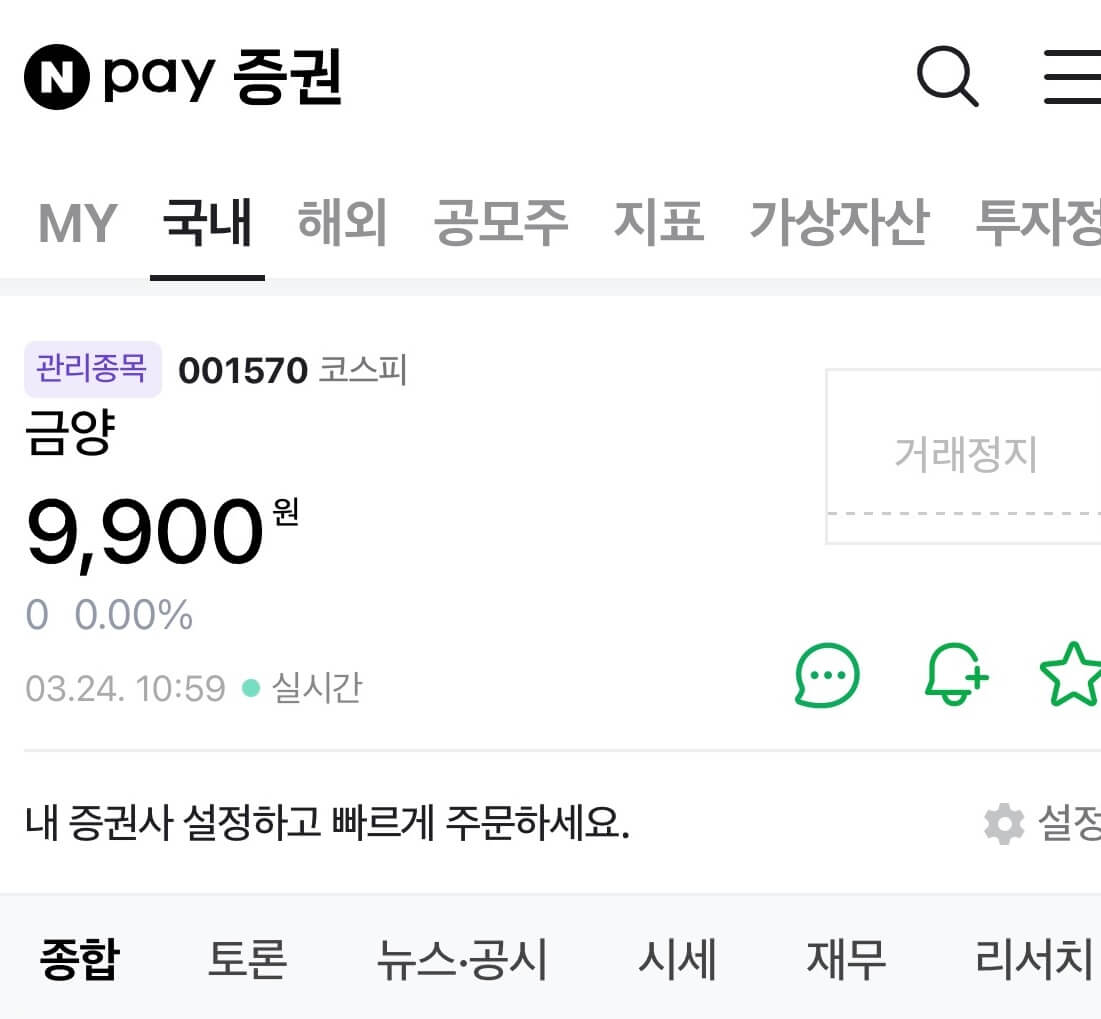
Five minutes after the audit report was filed, it became a trading-halted stock.
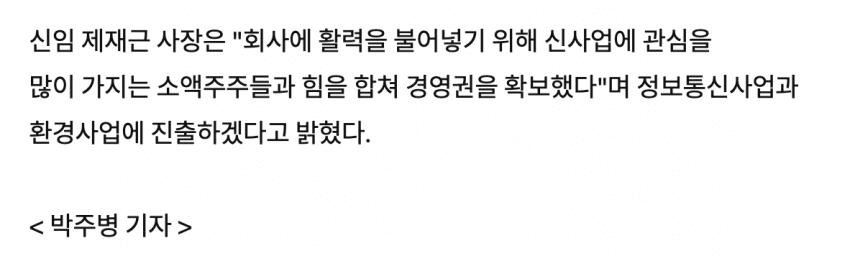
One striking fact is that during the dot-com era the company said it was moving into IT and the environmental industry, and then ran into management trouble. There are plenty of memorable stories from that time about its ill-fated relationship with iloveschool.
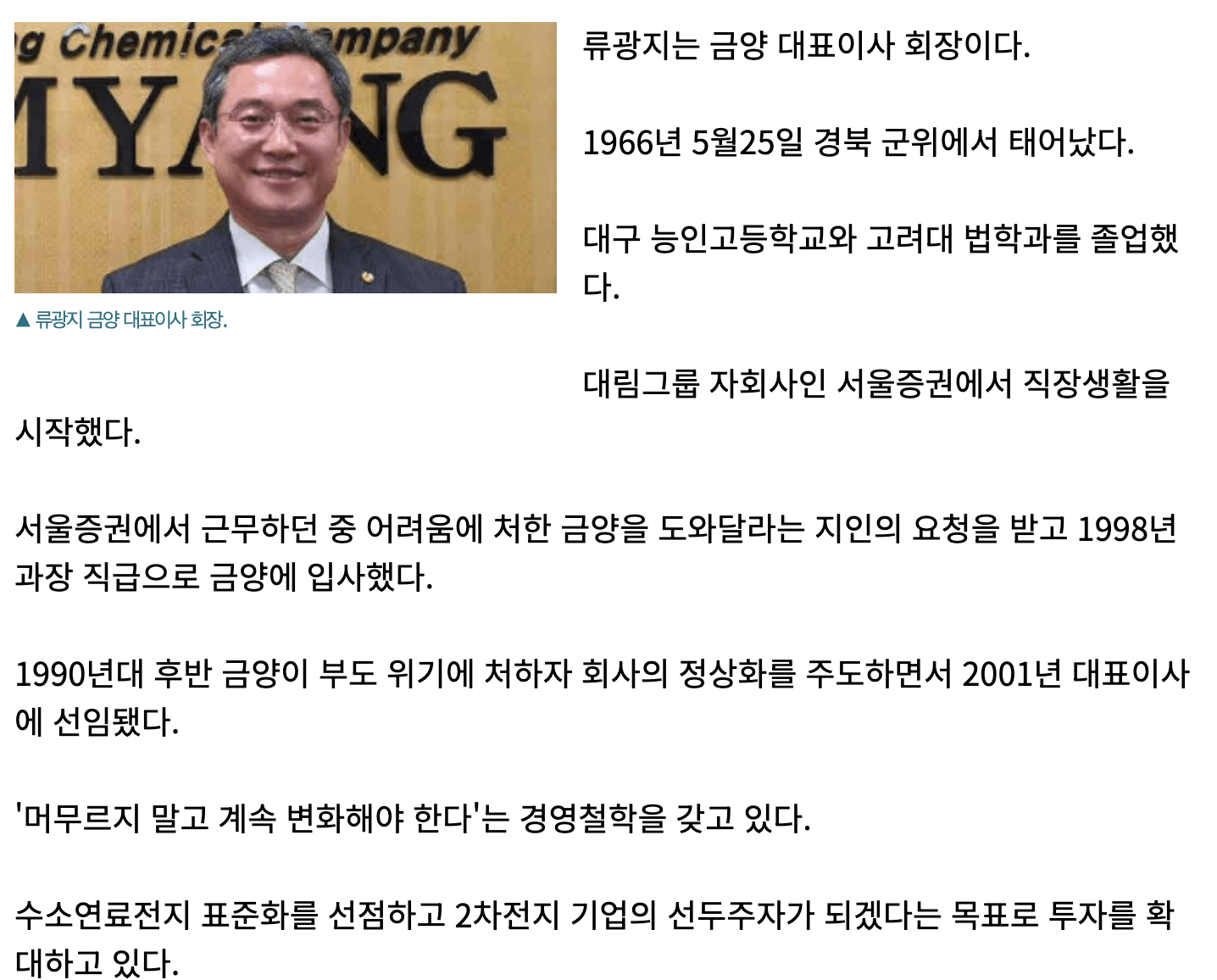
Today's chairman, Ryu Kwang-ji, is the man who moved from Seoul Securities to what is now Kumyang and brought the company back to life. And the company slid in exactly the same way.
Related posts
Ace Bed Company Analysis
Ace Bed is a premium bed brand focused on the domestic market, with a very stable financial structure and debt-free management, maintaining a high dividend yield (5.71%). ROE is decent, but capital efficiency is low due to excessive cash holdings. The owner family's stake exceeds 80%, and maintaining the listing appears to be largely for management succession. Short-term surges are difficult, but long-term investment appeal still exists.
The High-Dividend Trap
'High-dividend' stocks are not always a good choice. A high dividend payout ratio means lower long-term growth, and receiving dividends every year eliminates the tax deferral effect. Caution is needed because the dividend may not be sustainable or the company may have low growth potential.
Is Trump Really a Successful Businessman President? (Feat. 6 Bankruptcies)
Trump has packaged himself as a successful businessman, but in reality he has experienced six bankruptcies, and most of his assets were inherited from his father. He repeatedly faced crises through excessive leverage and reckless investments, and in 2024 faced yet another crisis due to inflating his assets.